
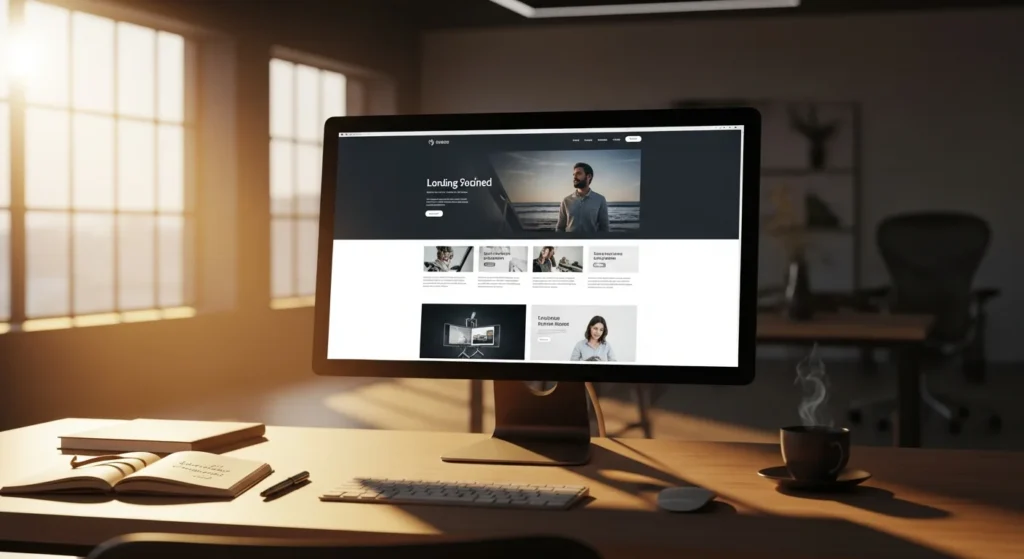
The Page That Almost Killed My Product Launch
I once spent three months building a software tool, poured $2,000 into Facebook ads to drive traffic, and watched in horror as my conversion rate hovered at 0.4%. Not four percent — zero point four. Out of every 250 visitors, one person signed up. The product wasn’t the problem. The landing page was a disaster. It tried to say everything, so it said nothing. That painful experience taught me more about what actually moves people to click than any marketing course ever could.
Here’s what I’ve learned since then — not from theory, but from rebuilding that page five times, running dozens of A/B tests, and eventually pushing that conversion rate past 11%.
Start With One Person, One Problem, One Promise
The biggest mistake most people make when building a landing page isn’t a bad color scheme or a missing testimonial. It’s trying to speak to everyone at once. When you address “businesses of all sizes” or “anyone looking to improve their workflow,” you’re addressing no one. Your visitor lands on the page with a specific itch. Your job is to scratch exactly that itch within the first three seconds.
Think about the last time you searched for something urgently — maybe a plumber at 11 PM or a last-minute flight. You didn’t want a company’s life story. You wanted proof they could solve your problem right now. That’s the energy your headline needs to carry. Not clever wordplay. Not a mission statement. A clear, specific promise that mirrors the conversation already happening inside your visitor’s head.
When I rewrote my headline from “The All-in-One Productivity Platform” to “Stop Losing Client Emails in Your Inbox — Track Every Conversation in One Place,” signups tripled in a week. Same product. Same traffic. Different promise.
Design for Scanners, Not Readers
Here’s a truth that stings: nobody reads your landing page. At least, not the way you imagine. Eye-tracking studies from the Nielsen Norman Group consistently show that people scan web pages in an F-shaped pattern, picking up headlines, bold text, and images while skipping most body copy. Good UX design respects this behavior instead of fighting it.
That means your page structure matters more than your prose. Every scroll depth should answer the next logical question a skeptical visitor would ask. The sequence usually looks something like this: What is this? Why should I care? How does it work? Can I trust you? What do I do next? If your page answers those questions in that order, you’re already ahead of 90% of competitors who just dump feature lists onto a page and hope for the best.
White space isn’t wasted space — it’s breathing room. Dense blocks of text feel like homework. Short paragraphs, clear section breaks, and intentional visual hierarchy guide the eye exactly where you want it to go. Every element on the page should either build desire or reduce friction. If it doesn’t do one of those two things, cut it.
The CTA Is a Conversation, Not a Command
Most people treat their CTA like an afterthought — slap a “Submit” or “Sign Up” button at the bottom and call it a day. But your call-to-action is arguably the highest-leverage element on the entire page. It’s the moment of decision, and the language you use there either pushes people forward or gives them one last reason to hesitate.
“Get My Free Guide” outperforms “Download” almost every time. “Start My Trial” beats “Submit.” Why? Because the first versions are written from the visitor’s perspective. They echo what the person wants, not what you want them to do. Small shift, massive impact.
Placement matters too. Don’t hide your CTA below a wall of text. Place it where the emotional peak hits — right after a powerful testimonial, right after you’ve demonstrated the key benefit, and yes, also at the top for visitors who arrive already convinced. Repeating the button two or three times across the page isn’t pushy. It’s practical. People make decisions at different speeds.
Trust Is the Silent Conversion Killer
You can nail the headline, design a gorgeous layout, and write the most compelling CTA on the internet — and still watch visitors bounce if they don’t trust you. Conversion optimization isn’t just about persuasion. It’s about eliminating doubt.
Real testimonials with names, photos, and specific results carry ten times the weight of anonymous quotes. Logos of companies you’ve worked with act as silent endorsements. A money-back guarantee or a “no credit card required” line near the signup button removes the last mental barrier standing between curiosity and commitment.
One tactic that worked surprisingly well for me: adding a short FAQ section right above the final call-to-action. It caught objections I didn’t even realize visitors had — pricing concerns, data security questions, cancellation policies. Addressing those doubts at the exact moment someone’s deciding whether to commit turned fence-sitters into customers.
The Page Is Never Finished
The best landing page you’ll ever build is the next version of the one you have now. Launch something decent, watch real humans interact with it, then improve based on evidence — not hunches. Tools like Hotjar or Microsoft Clarity let you see where people click, where they stall, and where they leave. That data is worth more than any best-practice article, including this one.
So here’s my challenge: pick one thing from this post and change it on your page today. Just one. Test it for a week. Let the numbers tell you the story. Because the difference between a page that converts and one that doesn’t is rarely a complete redesign — it’s a series of small, smart bets that compound over time.